
A great way to create memorable travel experiences in a distant place is to “approximate, as best you can, in the short time allotted you, the life of a local.” That is, instead of checking-off a list of travel-industry certified “sights” when you go to a new place, simply seek out the same gatherings, amusements, sporting events, celebrations, and workaday shopping routines as the people who live there.
This bit of travel advice is not my own — it’s from Thomas Swick’s The Joys of Travel — and I’ll confess that this strategy can be hard to pull of in practice. I spent nearly five weeks in Paris and Provence earlier this year, for example, yet most of my interactions were with fellow travelers.
But approximating the life of a local has been on my mind this week — in part because I’ve been living my own local life at home in north-central Kansas. My corner of the U.S. has few big-name tourist attractions. Yet the simple pleasure I found this past Sunday while attending a trio of local activities — a church service, a poetry reading, a symphony performance — made me realize that the life I live at home might hold some clues about how I might choose to travel in distant places.
Based on what I’ve experienced in Kansas over the weekend, here are three strategies for travel to places with no clear tourist attractions. (Since most of the world lies off the beaten tourist-trail, this encompasses more places than it doesn’t.)
1) Look beyond religion at a local religious service

For the past few years, ever since my father moved into assisted living, I’ve been driving him to worship services each Sunday at a rural Swedish-American church not far from where I live. American churches have a reputation for weird political baggage, but the services at my dad’s Lutheran church have been refreshingly pragmatic: Sermons tout the value of service over power; of wisdom over riches; of spiritual over worldly rewards; of communal values over self-centered ones.
Beyond the service itself, however, I love how the church is an expression of a community that traces back to the arrival of Scandinavian immigrants 150 years ago: Swedish-language bibles sit in foyer display cases; black-and-white photographs of war veterans with names like Swenson and Gustafson line an anteroom; 1930s Norwegian pop-novels sit alongside 1950s illustrated kids’ bibles and 1990s Amish romance novels in the church library.
This past Sunday, the church’s altar was draped with quilts elderly church-ladies had invested the past year in sewing, to donate to poor people. Quilts, it feels like, are the original anti-technology craft. Why buy a mass-manufactured duvet when you can rally some friends, brew some coffee, cut up some disused clothes, and spend a few months indulging in the ritual act of making blankets for people who might need them?
In Europe, cathedrals are tourist attractions — as are mosques in North Africa, and temples in Southeast Asia — yet services in small-town churches (or mosques, or temples) most anywhere are the living expression of the faith-community they represent.
2) Go to a gathering of local artists and writers

By Kansas standards, Lindsborg (which brands itself as “Little Sweden” and boasts a Scandinavian gift shop) and Salina (which has a hipster-friendly annual street-art festival and Vinyl Summit) might well qualify as tourist towns. But most any small community in this part of the U.S. tends to have its own art and poetry scene, often centered on the local library or coffeeshop. These institutions aren’t the Whitney or The Moth, but they are a window into how art and literature are embraced outside of the metropole.
3) Seek out a local expression of high culture

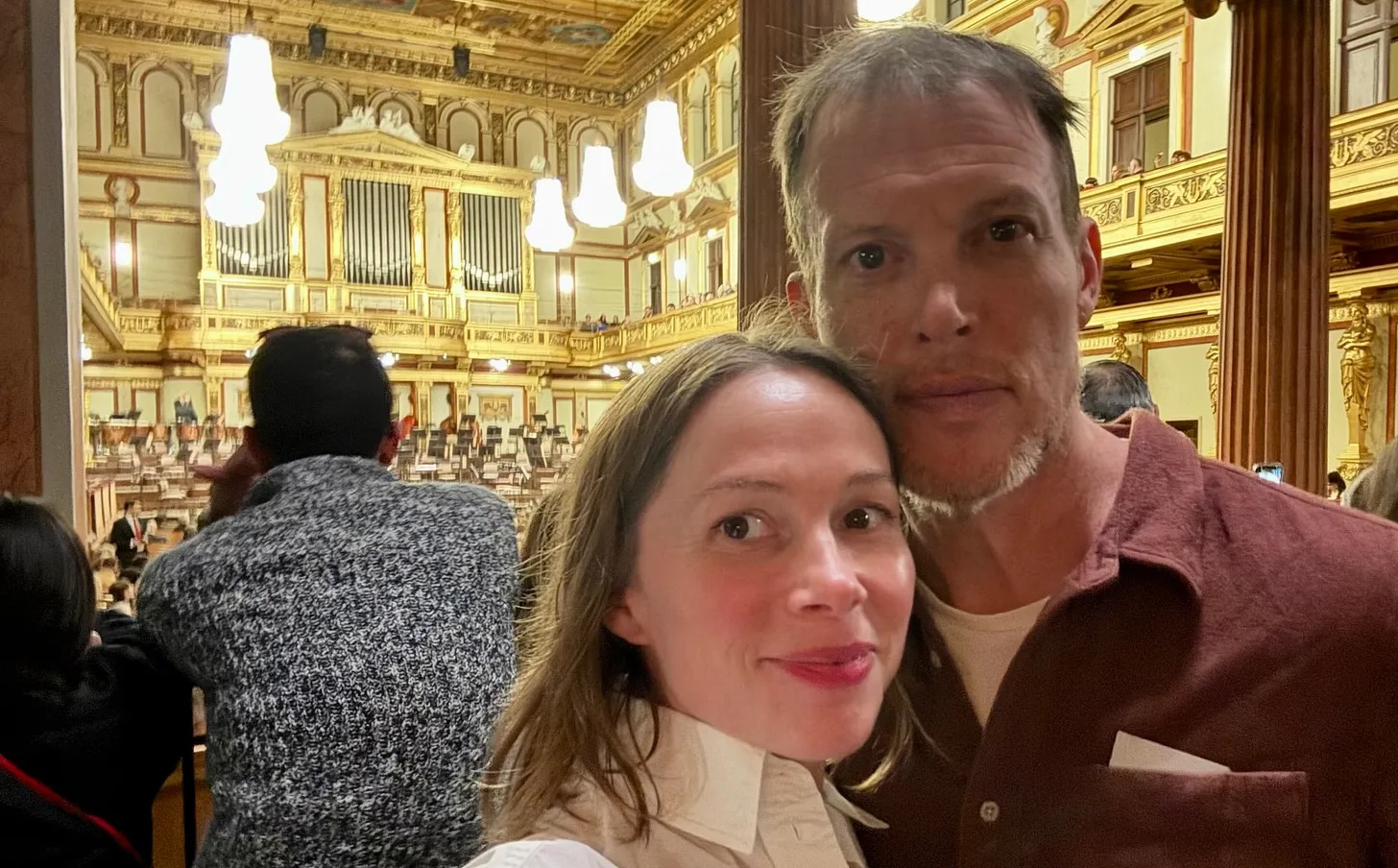
Events like these allow a person to enjoy beautiful music without the pretensions that might accompany a more cosmopolitan symphony performance. When Kiki and I attended the Salina Symphony last October, Gustav Holst’s The Planets was paired with a selection of Star Wars score music; when we attended a performance of Beethoven’s Symphony No. 9 this May, the performance was prefaced by an informal thank you to various local-business sponsors, as well as a speech from an area United Way representative, and the sale of a themed quilt mean to raise funds for the symphony.
In this way, Beethoven’s “Od to Joy” was inseparable from the joy (and resourcefulness) of the community that had endeavored to perform it. The next time I travel off the beaten-path overseas, I hope I can find something similarly emblematic of the communities I visit.
Note: “Dispatches” are short vignettes, profiles, and mini-essays written and posted from the road, often in tandem with my Instagram or Substack accounts. I don’t host a “comments” section, but I’m happy to hear your thoughts via my Contact page.