
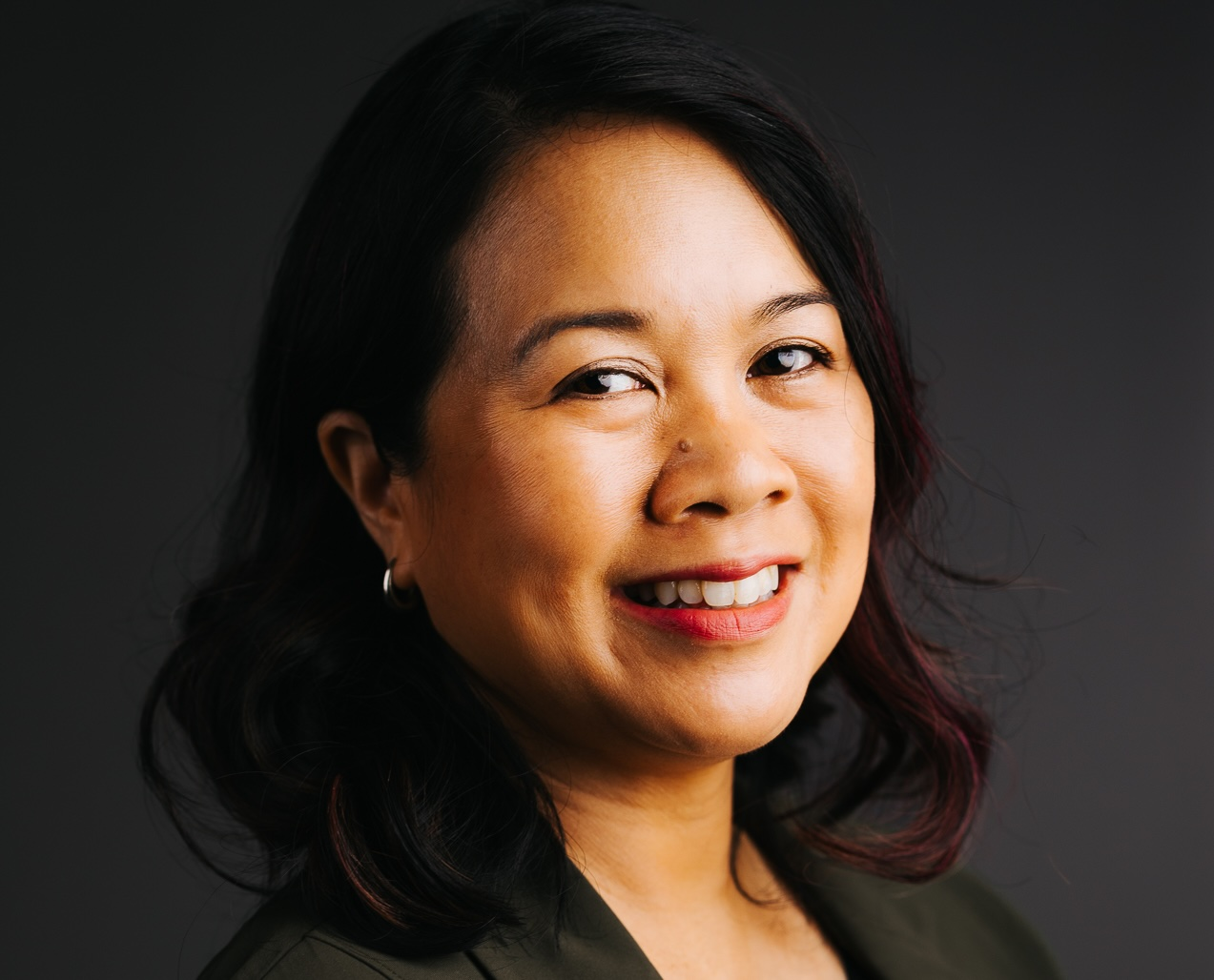
Angie Chuang is an author and educator based in Denver, Colorado. Her debut memoir, The Four Words for Home (Aquarius Press / Willow Books 2014), was based on her journalistic coverage of Afghan immigrants and travel to Afghanistan after 9/11. Her scholarly crossover book, American Otherness: News Media Representations of Identity and Belonging (Routledge 2025) won the Kappa Tau Alpha Mott Book Award for the best book or journalism or mass communication research of the year. Her literary nonfiction work has appeared in Narratively, Creative Nonfiction, Litro, Vela, The Asian American Literary Review, The Washington Post, Hyphen, several editions of The Best Women’s Travel Writing, and more. She is an associate professor of journalism at the University of Colorado Boulder, and was at American University in Washington, D.C., before that.
How did you get started traveling?
As the daughter of Chinese immigrant parents from Taiwan, my first international trip was when I was about a year old, before I could remember the journey. From there, our family traveled back there every couple years. Travel, long flights, switching in and out of vastly different settings and languages were just a part of life. In college, I studied abroad in the U.K. and took my first solo trips to Europe and loved the whole backpacking/Eurail pass/hostel scene. In time, my travel became more connected to my occupation as a newspaper reporter.
How did you get started writing?
I had always loved all forms of creative writing, but as a second-generation immigrant kid, I felt obligated to steer those passions toward journalism, which seemed like a more-practical way to make a living as a writer. I worked my way through multiple daily newspaper staff writer jobs, and in 2000 landed at The Oregonian covering immigrant and refugee communities. The 9/11 attacks happened shortly after I started, and within a few years, I found a way to travel to Afghanistan to cover what I felt then was one of the most urgent stories on my beat, which is how those who had survived decades of war in Afghanistan were returning from exile to attempt to rebuild.
What do you consider your first “break” as a writer?
One of my most encouraging early “breaks” happened through travel writing. I was primarily writing journalistic stories and experimenting with some more literary first-person pieces after having returned from a month reporting in Afghanistan in 2004. Legendary travel editor Don George put out a call for pieces for a Lonely Planet anthology somewhat ironically titled Tales From Nowhere, and I submitted a piece about rural Afghanistan. It was thrilling to have the essay accepted and published. That was the first time I saw a path for me as a literary writer and possibly a travel writer.
As a traveler and fact/story gatherer, what is your biggest challenge on the road?
Having interviewed and written about survivors of war, repression, genocide, and extreme poverty in Afghanistan, Vietnam, Rwanda, and other places, I’m always conscious of my positionality in parachuting in and attempting to capture real suffering or trauma, framed in a western privileged context. As a person of color based in the U.S., I have felt a growing responsibility to report and write with awareness of the colonialist histories and norms of both western journalism and travel writing. I can’t say I always found a way to decolonize these genres of writing, and I certainly have been complicit earlier in my career. I have tried to be reflexive in my writing, regarding who I am, as a westerner, an American, and a woman of color, in relation to the people and places I’m writing about.
What is your biggest challenge in the research and writing process?
I’m a prolific notetaker and I collect on-the-ground and researched information like a sponge. But it takes me a very long time, sometimes years after, to truly see what the real story is. This obviously didn’t help when I was a journalist and had tight turnarounds and deadlines, but doing more literary writing gave me the opportunity to let broader themes percolate over time. Taking this time made my first book, The Four Words for Home, and the essay, “Scars, Silence, and Dian Fossey,” about a trip to Rwanda, possible.
What is your biggest challenge from a business standpoint?
I’ve never been able to make a business of literary or travel writing, so I’m the wrong person to ask this question. I’ve traveled and written while working first as a full-time newspaper journalist, and then as a full-time academic teaching journalism, so that was the business plan, I suppose.
Have you ever done other work to make ends meet?
I’ve always relied on my income as a full-time journalist, and then a full-time journalism professor, to make ends meet.
What travel authors or books might you recommend and/or have influenced you?
Stephanie Elizondo Griest’s work blends journalism, travel writing, memoir and, most recently, arts criticism in Art Above Everything, to really contextualize the travel elements of her work in ways that address broader issues. Journalist Philip Gourevitch’s We Wish to Inform You that Tomorrow We Will be Killed with Our Families was a vital resource on the Rwandan genocide before and after I traveled there. As an outsider and White American, he understood the assignment was to report and research so deeply that the voices of his sources spoke with the authority that he claims lightly.
Nobody calls James Baldwin a travel writer, but to me, his writings about mid-20th century Paris and France are exemplary. Andrew X. Pham, who passed away too young in early 2025, inspired me early in my writing journey with Catfish and Mandala.
What advice and/or warnings would you give to someone considering travel writing?
I would encourage an open-minded view of what constitutes travel writing and the various ways to approach it. Of course, there are the articles and guides that are about how to travel in a particular place, and those serve an important purpose. Beyond service journalism, I would encourage writers to look at any writing or reporting that brings the reader to another place, or vice versa, as potentially travel writing. Also, while first-person perspectives often drive travel writing, reporting—talking to people, interacting with a range of locals, asking questions—and research go a long, long way to elevating a piece.
Oh, and find a knowledgeable tax accountant if you’re going to freelance (even if you’re working full-time doing other writing, as I did), and learn how to properly fill out a Schedule C.
What is the biggest reward of life as a travel writer?
I don’t know if I’ve done enough travel writing to claim a “life as,” but it’s a gift to see a place and meet people with the senses and mind of a writer. When you’re finally done with a piece that connects to that experience, after all the thinking and research and revisions, it’s incredibly rewarding if you learn that you’ve captured a glimmer of accuracy about a place, or that you’ve sparked people’s interest in it who might have not thought about it much before.