
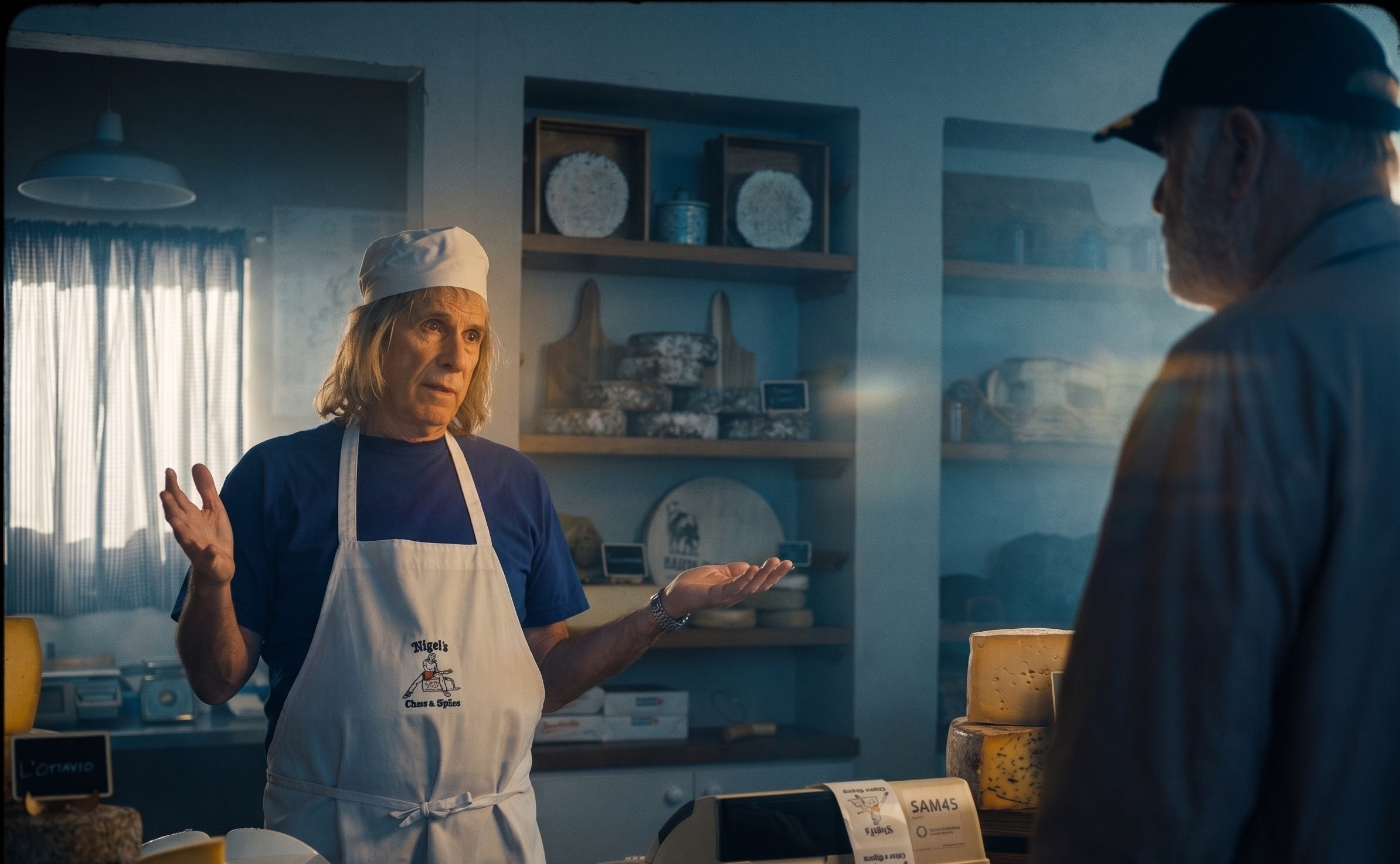
The movie Spinal Tap II: The End Continues has stuck with me months after watching it. In part because there was something grotesque about its comic attempts to bring humor out of its original 1980s incarnation — a movie about an aging heavy metal band, and all the cliches and absurdities that come with its struggle for relevance and continual reinvention. Which makes it feel deeply strange that the sequel would try to recycle those themes in the context of its septuagenarian characters forty years later.
This was a deeply unfunny reboot of a movie that I (and many people) truly adore, and its biggest misstep is that — forty years in — it drills down looking for more comic grist about aging. But aging is an utterly different prospect when one is in their 70s than when one is in their 30s. Whereas absurd attempts to deny age and time makes for sharp storytelling about rock stars nearing middle age, trying to bring similar humor out of these now-elderly characters is sad to the point of being faintly offensive.
The movie starts by showing the three principal musicians as “washed up,” years after their rockstar heyday. Derek Smalls is the proprietor of a homespun glue museum in London; Nigel Tufnel owns a cheese-and-guitar shop in the north of England; and David St. Hubbins produces music for true-crime podcasts in a Los Angeles studio. All of which are interesting pursuits for these elderly men (and far more dignified than trying to wring more years out of a musical genre that defined itself by its evocation of youth).
A better movie would have shown them making the most of these pursuits, rather than implying that these endeavors are pathetic undertakings compared to going back on-stage as rock stars. To show the Spinal Tap guys attempting to play a nostalgia show is insipid compared to what one might have found making sense of one’s legacy from the perspective of an artisanal cheese shop or a glue museum. To be content with being that age — and to deal with one’s own past reflected back through the gaze of old fans and curiosity seekers — is far more interesting from a story standpoint than trying to rehash the fame and acclaim that itself was stale for these characters in the 1980s.
Perhaps it would be harder to plumb jokes (or, at least, the broad humor that they were aiming for) out of this, but it would have been much more affecting to show these men humorously making sense of their past rock-lives than trying to reinvigorate their rock-star personas. Some of the best comedy from the original movie — like the “this one goes up to 11” phrase that became its tagline — is actually quite subtle, and speaks to the clueless narcissism and silliness it can come with trying to live life as a performer. It feels like wiser writers would have made a more affecting sequel than the hard-to-watch, celebrity-cameo-encrusted movie they ended up with.
As a tragic footnote to all of this, Spinal Tap II was Rob Reiner’s last movie before being murdered by his own son not long after. It makes a strange swan-song for a man who evoked so many stories that affected me when I was young — most notably the movies Stand by Me and When Harry met Sally.
Interesting that those other two 1980s Rob Reiner hits didn’t necessitate sequels, since they were originally told from a hindsight perspective. That is, from the get-go, we sense that Harry and Sally are meant to be romantic partners, and we know that Gordy of Stand By Me will lose all of his friends — most notably Chris Chambers, who (we learn in the opening scene) will be murdered as an adult.
I would have loved for the Spinal Tap sequel to have reached for something so poignant and wise — and it feels like it could have done so while still being funny.
Note: “Dispatches” are short vignettes, profiles, and mini-essays written and posted from the road, often in tandem with my Instagram or Substack accounts. I don’t host a “comments” section, but I’m happy to hear your thoughts via my Contact page.