
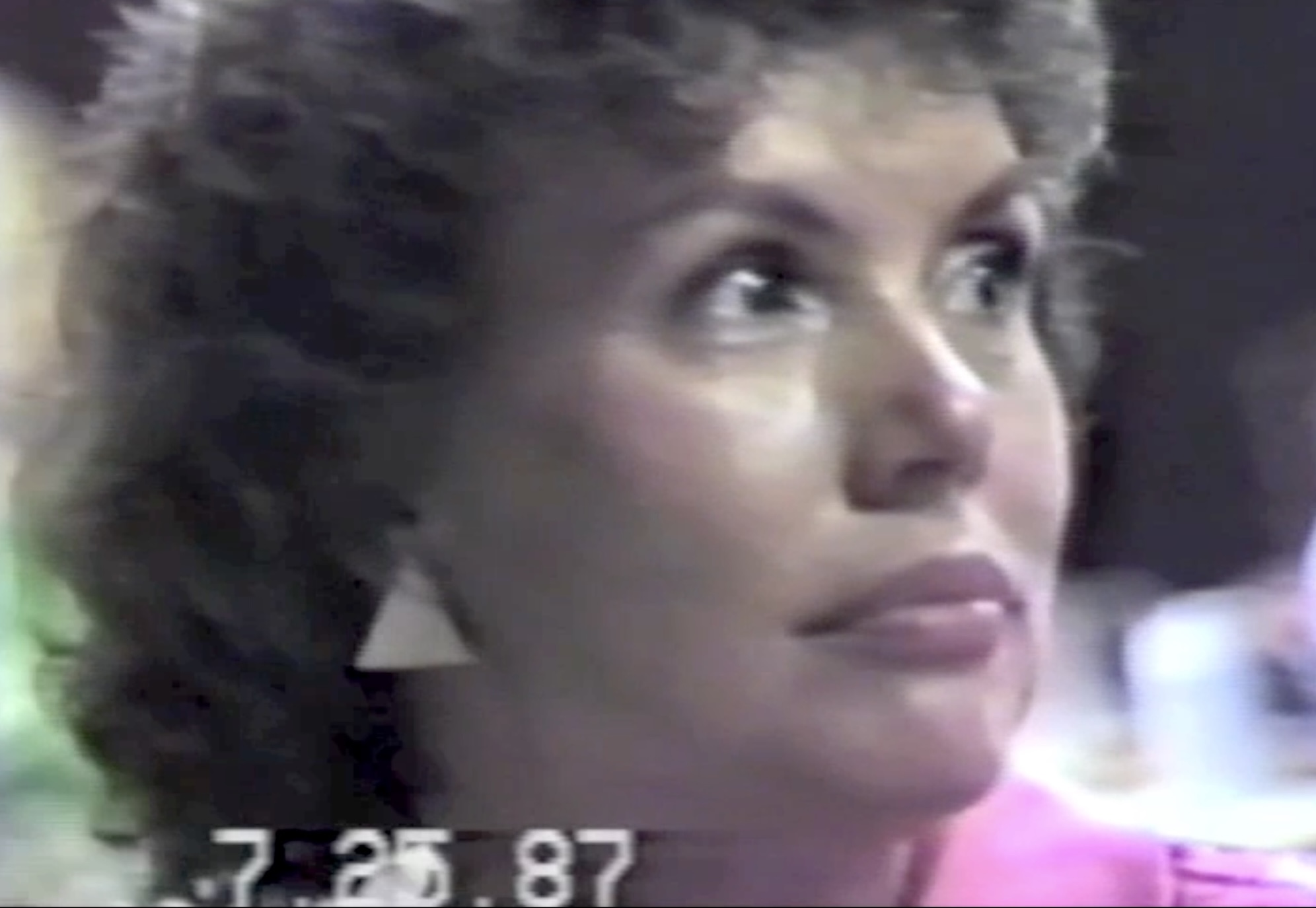
When my mother, Alice Potts, died last month, part of the process of working through my grief came in digging into the archive of digital files I have collected over the years to document her life. This ritual was in part an endeavor to eulogize her in a way that honored who she was, but it was also a way of mourning her — of dealing with her absence by archiving her presence — and trying to hold on to parts of who she was, and how she lived in the world.
Archiving my mom’s life was a ritual that began well before she was diagnosed with dementia some years ago. I digitized dozens of photo prints from the various chapters of her life, and filed away the paper journals into which she’d been recording her own life since retiring and moving from Wichita to rural north-central Kansas 20 years ago. I interviewed her and my dad about their travels with me to Asia and Europe for my podcast, and conducted 16+ hours of less-polished “oral history” interviews about my mom’s life.
Curating all of this was a way to honor my connection to (and love for) her in a way specific to my own way of being in the world.
One surprising aspect of archiving my mom’s life came in the form of random digital video files, since neither I nor she had ever sought to deliberately record her life on video. The video record of her life is thus something of a happy accident — and it’s remarkable how this video footage can offer a glimpse into the person she was, in a way that is more immediate and visceral than other forms of media.
So, as part of this ephemera-inspired elegy to my mom’s life, I’d like to share (and reflect on) a handful of these video clips here.
Barred Tiger Salamander state amphibian campaign on KAKE TV Wichita (1994)
The span of Alice’s life might be seen as a kind of measuring stick that demarcates how technology has transformed how we interact with — and make sense of — the world. In my oral history interviews with my mom, she admitted that, when she was growing up, TV was a bewitching, exotic machine that lived exclusively in the homes of her wealthier friends and relatives. It was a device that showcased public figures, celebrities, and people who’d accomplished important things.
Interestingly, the oldest archival footage I have of my mom speaking on video was a TV appearance documenting a project that has come to define her public legacy: Her successful 1994 campaign overseeing the efforts of her second-grade elementary school students to get the Barred Tiger Salamander declared the official Kansas State Amphibian.
This ten-minute clip from the “Mike and Mogey in the Morning” show on KAKE-TV Wichita (the local ABC affiliate) doesn’t just document the scientific and legislative lessons my mom’s students learned during the campaign — it also showcases my mom’s skill as an educator: Note how, when the TV host throws off one of the young student’s concentration by making a lame joke, mom gently takes over the interview (starting around 5:00) so that her visibly nervous student can finish sharing his carefully prepared research information.
Alice gives a tour of her childhood farm in Coffey County, Kansas (1997)
There was a time in mid-to-late 20th century America when “home movies” were the purview of hobbyists who’d invested in 8mm film cameras — and for this reason the earliest footage I have of my father was shot by his college professor during an undergrad field trip to Big Bend National Park in 1960. My dad also claims that a friend shot 8mm film footage of dad’s wedding to my mom in 1968, but that it was tossed out when his friend was going through a divorce a few years later.
Thus, the first glimpse I have of my mom on home video is a few seconds of her at a dining table — looking engaged and attractive — as my dad speaks at a family reunion in 1987. (The main image of this post is a screen-capture from that video).
Nearly ten years after this, Mom briefly talked to camera from her kitchen in Wichita for a VHS video I made for my students when I went to South Korea to teach English in 1996. This proved so popular with my students (who mailed letters to her as a way of practicing their written English) that she made her own VHS video to share with my Koreans students the following year.
This footage shows her giving my students a video tour of the Coffey County farm where she grew up. By this point she hadn’t lived there in 35 years, but it’s clear that she maintained a full-hearted love for the place that had formed her youth. We can all now widely share informal digital-video tours of our home places, thanks to smartphone technology and social media, but there’s something engaging and poignant about mom speaking to a VHS camera (which she’d checked out of her school library) in 1997, in the manner of a winsome TV host, as she shows viewers the kitchen and barnyard where she’d spent her youth, as well the horizon of Aliceville, the nearby town where she went to church and elementary school.
Alice Potts receives the Wichita Distinguished Classroom Teacher Award (2001)
Not long after mom died, as I was combing through ephemera from my mom’s life, I happened to watch Stand By for Tape Back-Up, an experimental video documentary by Scottish poet Ross Sutherland. This found-footage video essay uses memoiristic recollection and philosophical rumination alongside snippets from various 1980s American TV shows that Sutherland and his now-dead grandfather had recorded onto a VHS tape decades before. The documentary is something of a self-portrait of the poet, even as it is an elegy for his grandfather — and the presence of the deteriorating (and outdated) VHS-recorded TV footage echoes the fragility of memory itself. “As long as I have this tape I feel like my grandad is still with me,” Sutherland intones at one point.
Perhaps the act of curating my mom’s video footage here is also a way of making her feel like she is still with me (and also, in a way, a self-portrait within an elegy).
This video overview of Alice’s accomplishments as an elementary school teacher was made when the Wichita Public Schools gave her a “Distinguished Classroom Teacher Award” late in her career. It’s one of several such awards she won around that time — others include the Kansas Wildlife Federation’s 1994 Wildlife Conservationist Award, and Recognition for Exceptional Contribution to the State of Kansas (also in 1994) from Governor Joan Finney.
Interestingly, when I asked mom (amid our “oral history” interviews) what she viewed as her legacy, she didn’t mention anything professional. Instead, she said she hoped she’d be remembered as “a woman of faith; someone who valued honesty, hard work, and kindness to others.” It feels like that this ethos — valuing character over any list of résumé-worthy “accomplishments” — is what she tried to instill in her students, and I think that comes through in this video.
Alice visits her neighbor’s “Living Nativity” in rural Saline County, Kansas (2016)
Searching my laptop for video footage of my mom yielded 15 clips (10 converted from VHS tapes, 5 from digital cameras) that had been recorded before 2015. By contrast, mom appeared in 85 different digital video clips that had been recorded after 2015 — including 35 that had been recorded during the 2020 Covid lockdowns alone. This is a testament to the way smartphone videos have transformed the way we document our lives.
Whereas in her oral history interviews mom recalled the youthful excitement with which she watched old movies projected onto the side of the Aliceville general store on summer nights in the 1940s/1950s, the 2010s/2020s allowed her to watch — and create — a plethora of video content using the phone in her pocket. In this way, the last 10 years of her life were exponentially more well-documented on video than the first 70.
My favorite of those seven-dozen late-life digital videos was this clip of mom visiting a Saline County “Living Nativity” during the 2016 Christmas season. Mom had a lifelong affection — and excitement — for Christmas, and while she was by nature a minimalist who didn’t accumulate many possessions, Christmas ephemera was a major exception. When I was cleaning out items from her house after she and dad moved into an assisted living facility in 2022, I found Christmas decorations in nearly every drawer and closet of the house (including ones in the kitchen and garage) — a testament to both her love of the holiday and the fact that dementia had cut into her ability to properly organize and store her possessions.
This Living Nativity footage also shows mom’s love of animals, and her sheer excitement at the task of feeding (and talking to) the goats, sheep, and donkeys that had been penned alongside mannequins of Jesus, Joseph, Mary, and the Wise Men. I love to watch and rewatch this footage of mom exuding so much raw exuberance
As wholesome as mom seems in all of the footage I’ve shared here, mom’s generous-minded, open-hearted attitude toward life wasn’t necessarily something that came easy for her: It was something she actively cultivated, throughout her life, against her baser, pettier instincts. In her obituary post I mentioned her gentle New Year’s resolutions for 2020 (“1. Practice kindness 2. Embrace forgiveness 3. Be thankful”), but her manifold journal entries— and random notes jotted to herself— underpinned the fact that writing such virtues down was a way of reminding herself how to she hoped to walk through the world.
This in mind, I’ll end this with a list she taped into her journal one year before she moved into assisted living:
1. Free your heart from hatred
2. Free your mind from worries
3. Live simply
4. Give more
5. Be grateful every day